
If you missed the Introduction to the Jewish Feasts, you can read it here.
Description:
The first Biblical account of a sacrifice happened in Genesis 22 when God sent Abraham and his son, Isaac, to Moriah so that Isaac could be offered. Genesis 22:2 states, “He said, “Take your son, your only son Isaac, whom you love, and go to the land of Moriah, and offer him there as a burnt offering on one of the mountains of which I shall tell you.”
Isaac questions his father about the lamb and where it would come from. Genesis 22:8-9, “Abraham said, “God will provide for himself the lamb for a burnt offering, my son.” So they went both of them together. When they came to the place of which God had told him, Abraham built the altar there and laid the wood in order and bound Isaac his son and laid him on the altar, on top of the wood.” We know from reading the rest of the story that God did indeed provide the lamb and Abraham did not have to sacrifice his son. This story is a foreshadowing of Christ being the sacrificial lamb.
We saw the story of Passover in Exodus 12. Exodus 12:7, 12-14 states, 7 “Then they shall take some of the blood and put it on the two doorposts and the lintel of the houses in which they eat it. … 12 For I will pass through the land of Egypt that night, and I will strike all the firstborn in the land of Egypt, both man and beast; and on all the gods of Egypt I will execute judgments: I am the LORD. 13 The blood shall be a sign for you, on the houses where you are. And when I see the blood, I will pass over you, and no plague will befall you to destroy you, when I strike the land of Egypt. 14 “This day shall be for you a memorial day, and you shall keep it as a feast to the LORD; throughout your generations, as a statute forever, you shall keep it as a feast.” Once again, the blood had to be shed, paving the way for Christ to be our ultimate sacrifice.
Passover occurs on the tenth day of the first month, which is Nisan. The family selected a lamb that was free of any blemish and cared for it in their home for fourteen days. Personally, I cannot imagine having a lamb in my house for two weeks knowing that it would be slaughtered. I envision the kids naming the lamb. This feast symbolizes the death of Christ on the cross as the payment for our sins.
In her book, A Prophetic Calendar: The Feasts of Israel, Jill Shannon writes, “Passover showed that the Lord made a distinction between His people and those who were not His people, by the application of the lamb’s blood to their doors. The Lord also made a distinction between the firstborn and all the other offspring in a family. This separation extended to man and beast, even to the birth order of livestock and pets. We see the Lord’s intelligence, personality, and purposefulness all through Scripture. He made supernatural distinctions between people again and again, proving that nothing happens in a random or uncalculated manner.” P. 44
Leviticus 23:4-5 tells when it should occur, “These are the appointed feasts of the LORD, the holy convocations, which you shall proclaim at the time appointed for them. 5 In the first month, on the fourteenth day of the month at twilight, is the LORD’s Passover.”
Shannon also writes, “A verse is recited each year during Passover, And when your children ask you, “What does this ceremony mean to you?” then tell them, “It is the Passover sacrifice to the Lord, who passed over the houses of the Israelites in Egypt and spared our homes when He struck down the Egyptians.” On that day, tell your son, “I do this because of what the Lord did for me when I came out of Egypt.” This observance will be for you like a sign on your hand and a reminder on your forehead that the law of the Lord is to be on your lips. For the Lord brought you out of Egypt with His mighty hand (Exodus 12:26-27; 13:8-9). p. 47
During Passover, a special booklet, the Haggadah, is used. This booklet explains the ceremonial foods that are eaten, which symbolize the story. This meal is referred to as the Seder. The following foods are used:
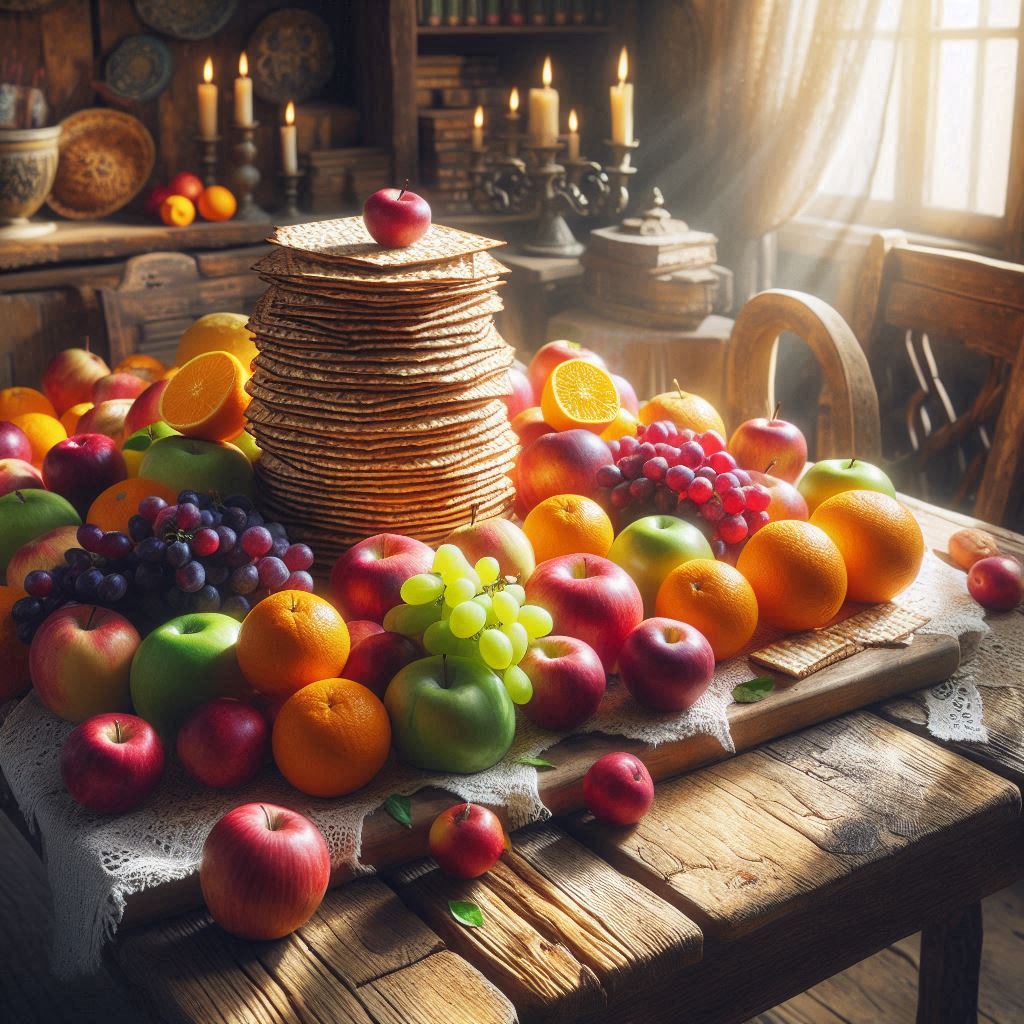
- Matzah—an unleavened bread which refers back to the Exodus when there was no time to let the bread rise.
- Four cups of sweet wine or grape juice which also refers back to the Exodus story. These cups represent the four promises in Exodus 6:6-8, “Say therefore to the people of Israel, ‘I am the LORD, and I will bring you out from under the burdens of the Egyptians, and I will deliver you from slavery to them, and I will redeem you with an outstretched arm and with great acts of judgment. I will take you to be my people, and I will be your God, and you shall know that I am the LORD your God, who has brought you out from under the burdens of the Egyptians. I will bring you into the land that I swore to give to Abraham, to Isaac, and to Jacob. I will give it to you for a possession. I am the LORD.’”
- Parsley—symbolizes the hyssop plant used to paint the doorposts.
- Shank bone of a lamb—placed on the Seder plate.
- Horseradish—bitter herbs
- Charoset—mixture to represent the mortar used to make bricks.
- Afikomen— broken matzah and hidden for the children to find. When the broken pieces are found and put together which to me symbolizes the broken body of Christ.
Jews throughout history have continued to pass this practice down through the generations. Had this tradition stopped, we might not have been able to connect this to the redemptive work on the cross. Jesus’s death occurred at the very hour the lambs were being slaughtered for Passover.
Www.gotquestions puts it like this, “Passover (Leviticus 23:5) – Pointed to the Messiah as our Passover lamb (1 Corinthians 5:7) whose blood would be shed for our sins. Jesus was crucified during the time that the Passover was observed (Mark 14:12). Christ is a “lamb without blemish or defect” (1 Peter 1:19) because His life was completely free from sin (Hebrews 4:15). As the first Passover marked the Hebrews’ release from Egyptian slavery, so the death of Christ marks our release from the slavery of sin (Romans 8:2).”
Christ’s fulfillment: Jesus, the Lamb of God was the sacrifice for sin. Matthew 5:17 makes it clear, “Do not think that I have come to abolish the Law or the Prophets; I have not come to abolish them but to fulfill them.”
When Christ was crucified on the cross, God once again made a provision of protection for His people.
Shannon puts it like this, “When the New Covenant was established in the greatest Passover the world will ever know, the same ancient seal of distinction and of God’s protection could be seen. We see a lamb, its blood and deliverance; we see death pass over the sealed ones. But the Lamb is a man: an innocent man; a perfect man; a humble and generous man; a Jewish man. He is filled with healing power and good deeds and utterly undeserving of a criminal’s agonizing death. This man’s blood covers the doorframes of our hearts with a mark only visible to the eyes of Heaven.” P 45
“When the hour of judgment and separation comes, one population will be spared, and another group will not be spared. There will be no protection or provision, apart from the covering blood of the sinless One. Then those who feared the Lord talked with each other, and the Lord listened and heard. A scroll of remembrance was written in His presence concerning those who feared the Lord and honored His name. “They will be Mine,” says the Lord Almighty, “in the day when I make up My treasured possession. I will spare them, just as in compassion a man spares his son who serves him. And you will again see the distinction between the righteous and the wicked, between those who serve God and those who do not” (Malachi 3:16-18).” P 45
There is nothing more encouraging than knowing that our eternity is sealed and secure.
Next week we will look at the Feast of Unleavened Bread.