
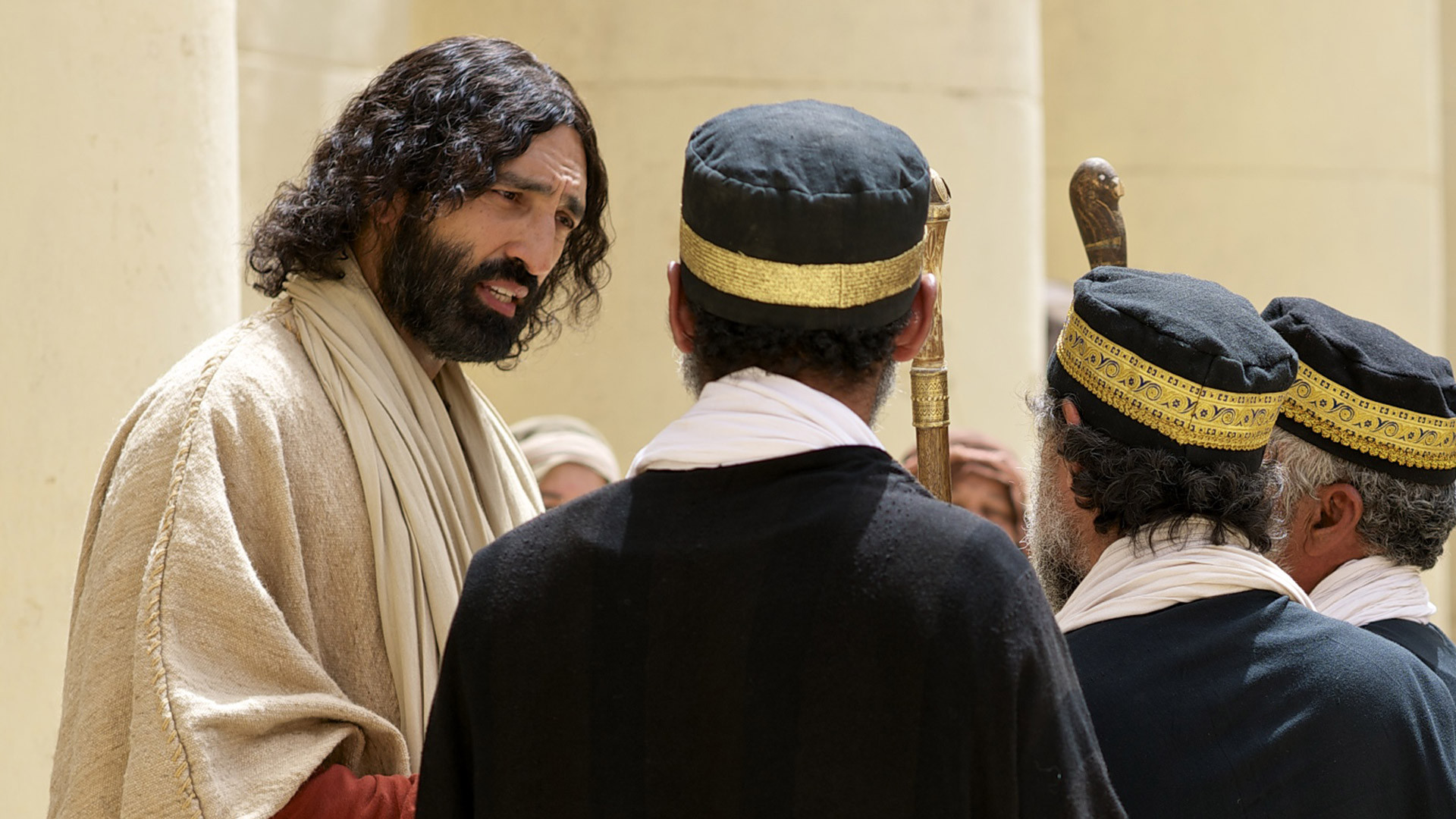
When we meet someone new, it is common practice to exchange names. It makes people feel important and valued when a person’s name is remembered. It is important that we use people’s names when we speak to them.
The concept of naming things and people began with Adam and Eve. God gave them the task of naming the elements of creation. [Genesis 2:19-20 tells us, “Now out of the ground the LORD God had formed every beast of the field and every bird of the heavens and brought them to the man to see what he would call them. And whatever the man called every living creature, that was its name. The man gave names to all livestock and to the birds of the heavens and to every beast of the field. But for Adam there was not found a helper fit for him.”

While Moses was speaking to God at the burning bush, he asked God about what people should call him. Exodus 3:14 says, “God said to Moses, “I AM WHO I AM.” And he said, “Say this to the people of Israel: ‘I AM has sent me to you.’” The phrase “I am” is well known as a reference to God. When Jesus made his seven “I am” statement, the Jewish people would have understood that he was equating himself to God.
There were seven witnesses in the gospel of John who recognized his divinity.
- John the Baptist says in John 1:34, “And I have seen and have borne witness that this is the Son of God.”
- Nathanael says in John 1:49, “Nathanael answered him, “Rabbi, you are the Son of God! You are the King of Israel!”
- The Samiritans report in John 4:42 ESV] 42 They said to the woman, “It is no longer because of what you said that we believe, for we have heard for ourselves, and we know that this is indeed the Savior of the world.”
- The beggar who was healed by Jesus says, John 6:69, “and we have believed, and have come to know, that you are the Holy One of God.”
- Martha believed and says in John 9:38, “He said, “Lord, I believe,” and he worshiped him.”
- John 11:27 ESV] 27 She said to him, “Yes, Lord; I believe that you are the Christ, the Son of God, who is coming into the world.”
- Thomas, the doubting disciple reports in John 20:28, “Thomas answered him, “My Lord and my God!””
Jesus also spoke plainly and acknowledged that he was God:
John 4:25-26 “The woman said to him, “I know that Messiah is coming (he who is called Christ). When he comes, he will tell us all things.” 26 Jesus said to her, “I who speak to you am he.”
John 8:24 says, “I told you that you would die in your sins, for unless you believe that I am he you will die in your sins.”
John 8:28 says, “So Jesus said to them, “When you have lifted up the Son of Man, then you will know that I am he, and that I do nothing on my own authority, but speak just as the Father taught me.”
John 18:5-6 says, “They answered him, “Jesus of Nazareth.” Jesus said to them, “I am he.” Judas, who betrayed him, was standing with them. When Jesus said to them, “I am he,” they drew back and fell to the ground.”
According to Warren Weirsbe in his book, Jesus in the Present Tense: The I AM Statements of Christ, writes, “In His I AM statements, Jesus not only tells us who He is, but He also tells us what He can do for us and what we can become through Him. If we are spiritually hungry, He offers us the bread of life. To those walking in darkness, He gives the light of life; and we need not fear death, because He is the resurrection and the life. Can we be sure of going to heaven? Yes, because He is “the way and the truth and the life” (14:6). Can our lives be fruitful for His glory? Yes, if we abide in Him and draw upon His life. In Jesus Christ, the great I AM, we have all that we need!” p. 26
The Seven “I Am” statements have always intrigued me. Several of the statements are metaphors. A metaphor compares a word or phrase and says it is something else. The first one we will explore is “I am the bread of life”. We read the directly in John 6:35, “Jesus said to them, “I am the bread of life; whoever comes to me shall not hunger, and whoever believes in me shall never thirst.”
“I am the bread of life.” John 6:48
Bread has a significant meaning for us. The first thing that comes to our minds is basic nutritional sustenance. Jesus spoke these words just after he fed the 5,000 with a couple of fish and loaves of bread. He is the our sustainer.
There are several other references in Scripture about bread.
John 6:35, “Jesus said to them, “I am the bread of life; whoever comes to me shall not hunger, and whoever believes in me shall never thirst.” John 6:41 “So the Jews grumbled about him, because he said, “I am the bread that came down from heaven.”
John 6:48 “I am the bread of life.”
John 6:27, “Do not work for the food that perishes, but for the food that endures to eternal life, which the Son of Man will give to you. For on him God the Father has set his seal.”
Isaiah 55:2, “Why do you spend your money for that which is not bread, and your labor for that which does not satisfy? Listen diligently to me, and eat what is good, and delight yourselves in rich food.”
John 6:33, “For the bread of God is he who comes down from heaven and gives life to the world.”
John 6:47-48, “Truly, truly, I say to you, whoever believes has eternal life. I am the bread of life.”
John 6:51, “I am the living bread that came down from heaven. If anyone eats of this bread, he will live forever. And the bread that I will give for the life of the world is my flesh.””
“Only two of our Lord’s miracles are recorded in all four gospels: His own resurrection and His feeding of the five thousand (Matthew 14, Mark 6, Luke 9, and John 6). In their accounts of the feeding of the five thousand, all four writers tell us what Jesus did, but only Mark tells us why He did it—because of His compassion for the crowd (Mark 6:34). In John’s record, Jesus reveals His compassion in three ways: He feeds the hungry crowd (John 6:1–15), He delivers His disciples from danger (6:16–24), and He offers the bread of life to a world of hungry sinners (6:25–71). Jesus did this miracle not only to meet human needs, but also that He might deliver a profound sermon about “the bread of life,” a sermon our lost world needs to hear today. What the world needs is Jesus, for He alone is the bread of life.”Wiersbe, Jesus in the Present Tense: The I AM Statements of Christ (pp. 28-29).
“THE PEOPLE IN THE CROWD THAT JESUS FED ARE like you and me and the people in our “crowd” today. They were hungry. Hunger is something God has built into the human body to remind us to eat, because without food and water, we will die. But there is a deeper spiritual hunger in the human heart that can never be satisfied with anything other than God Himself and the gifts of grace He shares with us. “Thou hast made us for Thyself,” wrote Augustine, “and our hearts are restless until they rest in Thee.” Wiersbe, Jesus in the Present Tense: The I AM Statements of Christ (p. 30).
That Jesus would compare Himself to such a common article as a loaf of bread shows the depth of His humiliation. It also shows us that we cannot have life without Him. Bread is called “the staff of life” because for centuries it has been the primary food of most people. Jesus Christ is “the bread of life,” and we cannot have spiritual life—eternal life—without Him. The miracles. Instead of accepting their Messiah, the crowd began to debate with Jesus. They contrasted Christ’s miracle of feeding the five thousand with the miracle of the manna in Moses’ day, when God provided “bread from heaven” (Ex. 16; see also Ps. 78:24). Wiersbe, Jesus in the Present Tense: The I AM Statements of Christ (p. 40).
Something that I find interesting is the Hebrew meaning of Bethlehem. Bethlehem means “house of bread”. He was born there and those who would have been familiar with the Hebrew language would have known that. Would they have caught the reference to Bethlehem when Jesus spoke those words? Does knowing the meaning of Bethlehem change how you read those verses? It changes it for me.
Other I Am Statements:
I Am the Resurrection and the Life
I Am the way, the Truth, and the Life
I Am the way, the Truth, and the Life
image from https://www.freebibleimages.org/photos/jesus-5000/
#faith, #Bible, #Scriptures, #Christian Women, #Discipleship, #womenintheBible, #IAM