

Originally posted on 11/28/23
Romans 16:1-2
Many people seem surprised when they find out that I don’t think women should be pastors. I’ve been asked how I could believe that. For me it is simple–the Bible does not permit it. Most people would agree that I am an opinionated person. When it comes to what Scripture says or doesn’t say, my opinion is irrelevant. We must take our cues from Scripture.
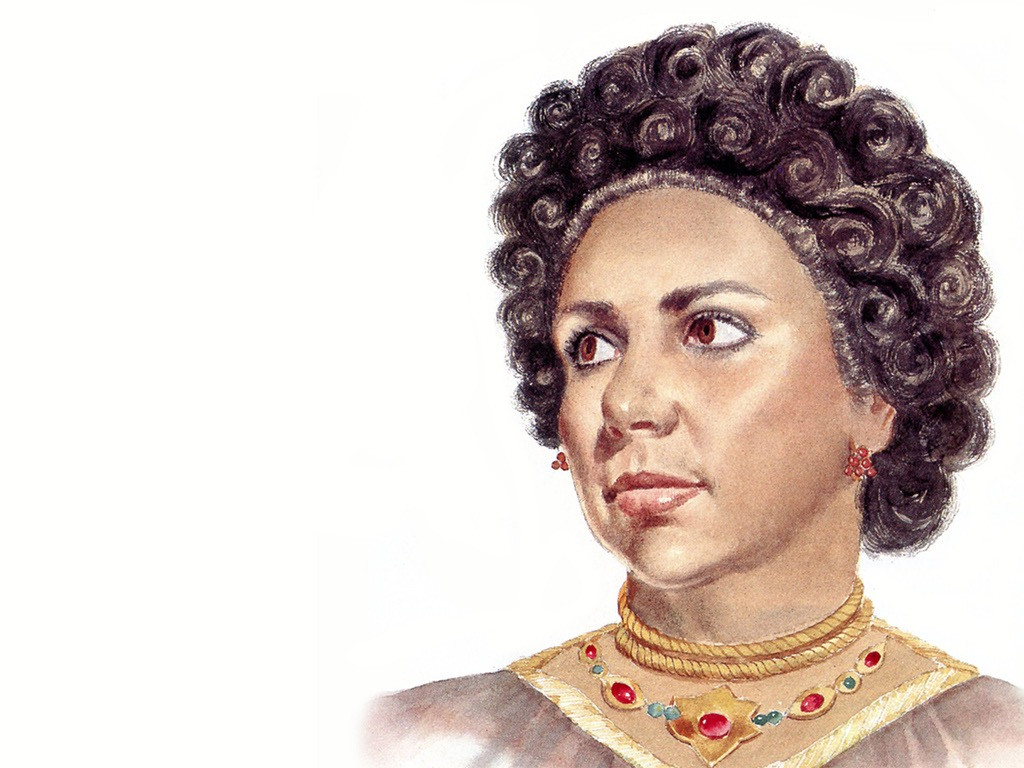
When I have discussions about whether or not women should be pastors, Phoebe is almost always mentioned. Phoebe is mentioned only once in the New Testament. Romans 16:1-2 states, I commend to you our sister Phoebe, a servant of the church at Cenchreae, that you may welcome her in the Lord in a way worthy of the saints, and help her in whatever she may need from you, for she has been a patron of many and of myself as well.” The word “servant” is the word that causes some of the debate.
Most scholars agree that Phoebe likely delivered the Book of Romans. She was most likely traveling to Rome on business. She was likely a wealthy widow who was faithful in her service to the church in Cenchreae.
“Servant” comes from the Greek word, “diakonos”. It has been translated to mean: minister (20x), servant (8x), deacon (3x). It basically means anyone who performs a service. When you see the word minister, you might draw the conclusion that she was the equivalent of our modern-day pastors or preachers. I do not believe that that is what is meant here. Our modern-day pastors or preachers are actually overseers which is not the same as mentioned in this passage. Our modern-day deacons may preach, but that is not the original purpose of deacons. (Acts 6:1-6).
In the Matthew Henry Commentary on Blue Letter Bible states: https://www.blueletterbible.org/Comm/mhc/Rom/Rom_016.cfm
“ As a servant to the church at Cenchrea: diakonon, a servant by office, a stated servant, not to preach the word (that was forbidden to women), but in acts of charity and hospitality. Some think she was one of the widows that ministered to the sick and were taken into the church’s number, 1 Tim. 5:9. But those were old and poor, whereas Phebe seems to have been a person of some account; and yet it was no disparagement to her to be a servant to the church. Probably they used to meet at her house, and she undertook the care of entertaining the ministers, especially strangers.”
According to Len Woods, in his book, 31 Women of the Bible, “Theology professors and ministers-in-training love to discuss and debate this verse and whether it describes (or even prescribed) an office of “deaconess” for the local church.” p. 123. First Timothy 3:12 states, “Let deacons each be the husband of one wife, managing their children and their own households well.”
“Paul instructed the believers in Rome to show hospitality to this sister in the faith, this servant of the church. And why? Because that’s what saints (God’s holy people) do. And also because Phoebe had been a “benefactor” to many, including Paul himself.” Woods, p. 123
The word benefactor literally means “one who stands beside in order to hold up or assist/” It was sometimes used in secular Greek writings to refer to a sports trainer, alert and at the ready to provide for the needs of his athlete. It broadly means “helper”; and more specifically in this context it means “supporter” or “patroness”. Woods p. 123-124
The strong indication is that Phoebe gave generously to the work of God. We don’t know where she got her means or how she derived her income. But she apparently used her material resources to help fund the spread of the gospel. Add such financial generosity to the other ways she served and helped and supported the Lord’s work. She spent her time tending to the spiritual needs of those in her Greek congregation as a “deaconess” (whether official or unofficial). She spent great effort traveling more than 600 miles from southern Greece to central Italy for the apostle Paul in order to deliever his world-changing letter. Woods, p. 124
2 Timothy 3:16 ESV All Scripture is breathed out by God and profitable for teaching, for reproof, for correction, and for training in righteousness,
All Scripture is breathed out by God. Paul writes in 2 Tim 2:12, “I do not permit a woman to teach or to exercise authority over a man; rather, she is to remain quiet.” It seems unlikely that Paul would commend someone who was going against his teachings. Scripture does not contradict itself. If it contradicts itself then God made a mistake. God does not make mistakes. He also does not commend people who are being disobedient and rebellious.
According to John Macarthur in his book, God’s High Calling for Women, “There is no record in the New Testament of a woman apostle, pastor, teacher, evangelist, or elder. The New Testament does not record any sermon or teaching by a woman” p. 35-36
I admire the testimony of Phoebe. She did what she could for her Christian brothers and sisters as well as her church. She gave generously to the work of the Lord. We can learn much about her example of service to Christ. God is glorified when we do what we can for those around us.
Photo: John Heseltine / Pam Masco / FreeBibleimages.org.