
Originally posted on 7/22/25

We find the story of the Samaritan woman in John chapter 4. It has always intrigued me the conflict between the Jewish people and the people of Samaria. Looking at history, it shouldn’t be all that surprising. In Jesus’ time, there was conflict between the Jews and the Gentiles. Israel battles with other Middle Eastern countries today. Even in our nation’s history we had the conflict that ultimately caused the Civil War. To fully understand the magnitude of the interaction between Jesus and the Samaritan woman, we need to look at the history between the Jews and Samaritans..
Gotquestions.org describes it like this, “The Samaritans occupied the country formerly belonging to the tribe of Ephraim and the half-tribe of Manasseh. The capital of the country was Samaria, formerly a large and splendid city. When the ten tribes were carried away into captivity to Assyria, the king of Assyria sent people from Cutha, Ava, Hamath, and Sepharvaim to inhabit Samaria (2 Kings 17:24; Ezra 4:2-11). These foreigners intermarried with the Israelite population that was still in and around Samaria. These “Samaritans” at first worshiped the idols of their own nations, but being troubled with lions, they supposed it was because they had not honored the God of that territory. A Jewish priest was therefore sent to them from Assyria to instruct them in the Jewish religion. They were instructed from the books of Moses, but still retained many of their idolatrous customs. The Samaritans embraced a religion that was a mixture of Judaism and idolatry (2 Kings 17:26-28). Because the Israelite inhabitants of Samaria had intermarried with the foreigners and adopted their idolatrous religion, Samaritans were universally despised by the Jews.”
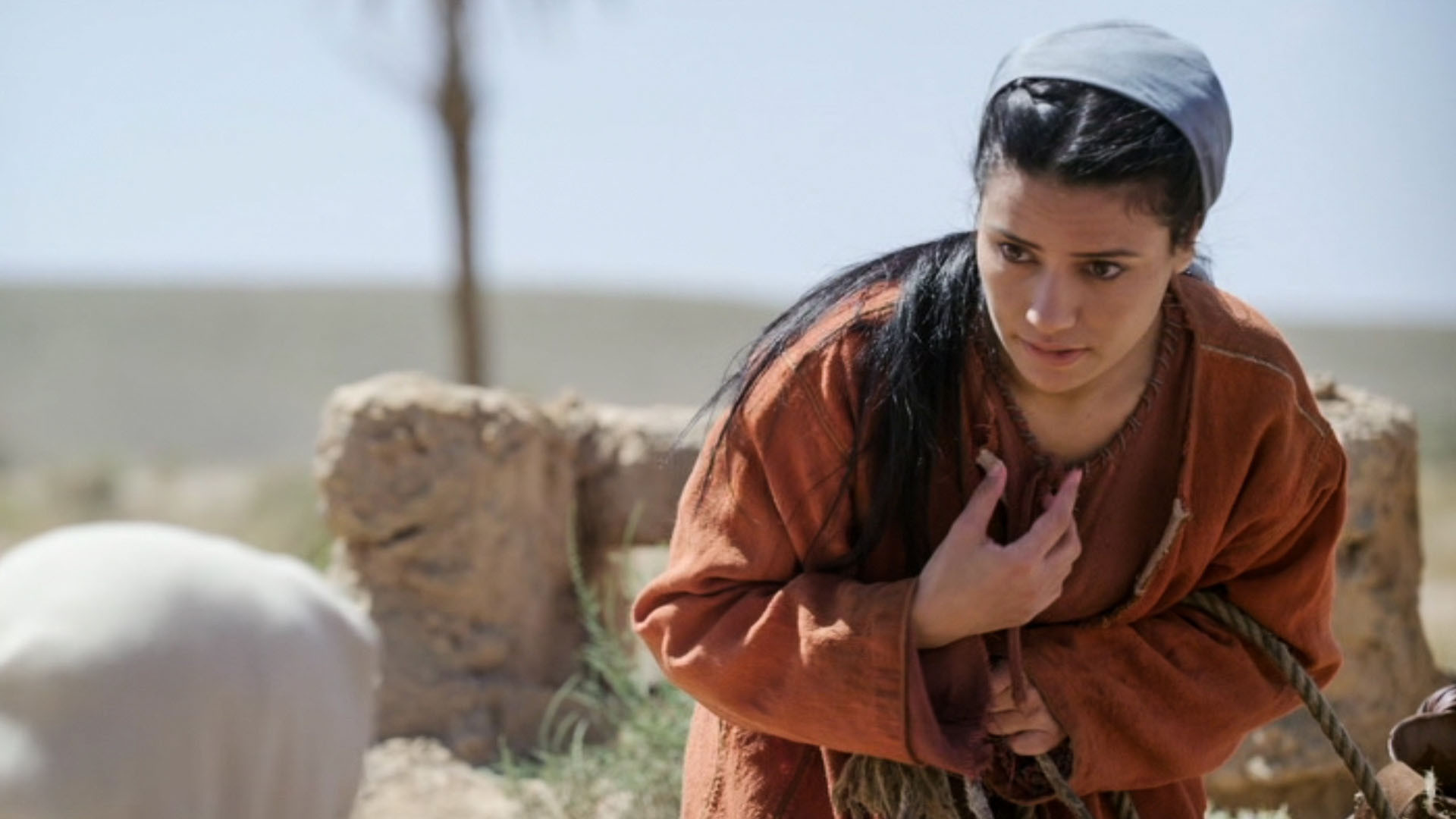
John 4:1-9, “Now when Jesus learned that the Pharisees had heard that Jesus was making and baptizing more disciples than John (although Jesus himself did not baptize, but only his disciples), he left Judea and departed again for Galilee. 4 And he had to pass through Samaria. So he came to a town of Samaria called Sychar, near the field that Jacob had given to his son Joseph. Jacob’s well was there; so Jesus, wearied as he was from his journey, was sitting beside the well. It was about the sixth hour. A woman from Samaria came to draw water. Jesus said to her, “Give me a drink.” (For his disciples had gone away into the city to buy food.) The Samaritan woman said to him, “How is it that you, a Jew, ask for a drink from me, a woman of Samaria?” (For Jews have no dealings with Samaritans.) “
Most Jews would have walked all the way around Samaria rather than going through it. Jesus went into the town of Sychar. He went to the well. It was the middle of the day when the day was the hottest. The village women would have gathered their water earlier in the day while it was cooler. The fact that this woman was there in the heat of the day demonstrates that she was not accepted in her community. Not only did Jesus enter Samaria, he spoke to a Samaritan woman. In our current society, it doesn’t like such a big deal that Jesus talked with a woman. However it was.
In the book 31 Women of the Bible, Herbert Lockyer wrote, “Why was it such a big deal that Jesus would have a discussion at a local watering hole with a Samaritan woman? First, there was the gender gap. Middle Eastern customs said that an upstanding man must not engage in conversation in public with a woman who was not his wife. What Jesus did was shocking, even taboo.
Second, there was a huge racial and cultural barrier. Jesus was a Jew; this anonymous woman was a citizen of Samaria. The Samaritans were the product of the Assyrian invasion and subjugation of the northern kingdom of Israel in 722 BC. Intermarriage with foreign peoples who had been resettled in the promised land resulted in a race of people with mixed ancestry and diluted devotion to Yahweh. “Pure-blooded” Jews viewed Samaritans with contempt; the Samaritans responded with equal hostility. John’s statement that “Jews do not associate with Samaritans” (John 4:9) was putting it mildly.
Third, there were issues of moral propriety. Jesus was a respected rabbi, a “holy man>” This woman was regarded in her culture as a “sinner” and thus a social outcast.
In every way, Jesus’ interaction with this woman was shocking. He crossed some huge barriers to engage her, to reveal eternal truth to her, and to call her to himself. This woman’s encounter with Jesus reminds us of God’s relentless love. It also screams the truth that life can change in a moment. Are you paying attention?” pp. 120-121
In verse 10 Jesus began to speak of the living water, John 4:10-15, “Jesus answered her, “If you knew the gift of God, and who it is that is saying to you, ‘Give me a drink,’ you would have asked him, and he would have given you living water.” The woman said to him, “Sir, you have nothing to draw water with, and the well is deep. Where do you get that living water? Are you greater than our father Jacob? He gave us the well and drank from it himself, as did his sons and his livestock.” Jesus said to her, “Everyone who drinks of this water will be thirsty again, but whoever drinks of the water that I will give him will never be thirsty again. The water that I will give him will become in him a spring of water welling up to eternal life.” The woman said to him, “Sir, give me this water, so that I will not be thirsty or have to come here to draw water.”
Jesus reveals that he knows this woman by asking her to call her husband. It certainly would have gotten her attention. In verse 16 we read, John 4:16-26, Jesus said to her, “Go, call your husband, and come here.” The woman answered him, “I have no husband.” Jesus said to her, “You are right in saying, ‘I have no husband’; for you have had five husbands, and the one you now have is not your husband. What you have said is true.” The woman said to him, “Sir, I perceive that you are a prophet. Our fathers worshiped on this mountain, but you say that in Jerusalem is the place where people ought to worship.” Jesus said to her, “Woman, believe me, the hour is coming when neither on this mountain nor in Jerusalem will you worship the Father. You worship what you do not know; we worship what we know, for salvation is from the Jews. But the hour is coming, and is now here, when the true worshipers will worship the Father in spirit and truth, for the Father is seeking such people to worship him. God is spirit, and those who worship him must worship in spirit and truth.” The woman said to him, “I know that Messiah is coming (he who is called Christ). When he comes, he will tell us all things.” Jesus said to her, “I who speak to you am he.”
Jesus gives one of the “I am” statements to her. Just think about how important these statements were. He had this conversation with one of the most lowly of citizens at the time. Jesus made clear that all were welcome in the kingdom.
Her story continues in verse 27. She went into town and began telling other about Christ.
John 4:27-42 “Just then his disciples came back. They marveled that he was talking with a woman, but no one said, “What do you seek?” or, “Why are you talking with her?” So the woman left her water jar and went away into town and said to the people, “Come, see a man who told me all that I ever did. Can this be the Christ?” They went out of the town and were coming to him. Meanwhile the disciples were urging him, saying, “Rabbi, eat.” But he said to them, “I have food to eat that you do not know about.” So the disciples said to one another, “Has anyone brought him something to eat?” Jesus said to them, “My food is to do the will of him who sent me and to accomplish his work. Do you not say, ‘There are yet four months, then comes the harvest’? Look, I tell you, lift up your eyes, and see that the fields are white for harvest. Already the one who reaps is receiving wages and gathering fruit for eternal life, so that sower and reaper may rejoice together. For here the saying holds true, ‘One sows and another reaps.’ I sent you to reap that for which you did not labor. Others have labored, and you have entered into their labor.” Many Samaritans from that town believed in him because of the woman’s testimony, “He told me all that I ever did.” So when the Samaritans came to him, they asked him to stay with them, and he stayed there two days. And many more believed because of his word. They said to the woman, “It is no longer because of what you said that we believe, for we have heard for ourselves, and we know that this is indeed the Savior of the world.”
I love this story about the Samaritan woman. Jesus excluded no one. He meets us where we are. What many people forget is that He does not let us remain in our current state. When we follow Jesus, there will need to be changes in our lifestyle choices. Jesus never leaves us where we are. As we continue to grow closer to the Lord, we continue to make changes. We do not become sinless, but we want to sin less.
She was so grateful that she shared the good news throughout her community. Are you sharing the good news of the Gospel? Have you lost your zeal for the changes the Lord made in your life? I pray we ALL will be more willing to share the good news of the Gospel with others.