
Have you ever read a passage of Scripture and wondered what it could possibly teach you about your life today?
The book of Judges is one of those books that can leave us with questions. Its pages contain stories of courage and cowardice, obedience and rebellion, faith and fear. We meet unexpected leaders, witness heartbreaking choices, and see the devastating consequences of turning away from God.
Yet woven throughout these difficult stories is a truth worth exploring: God remains faithful, even when His people are not.
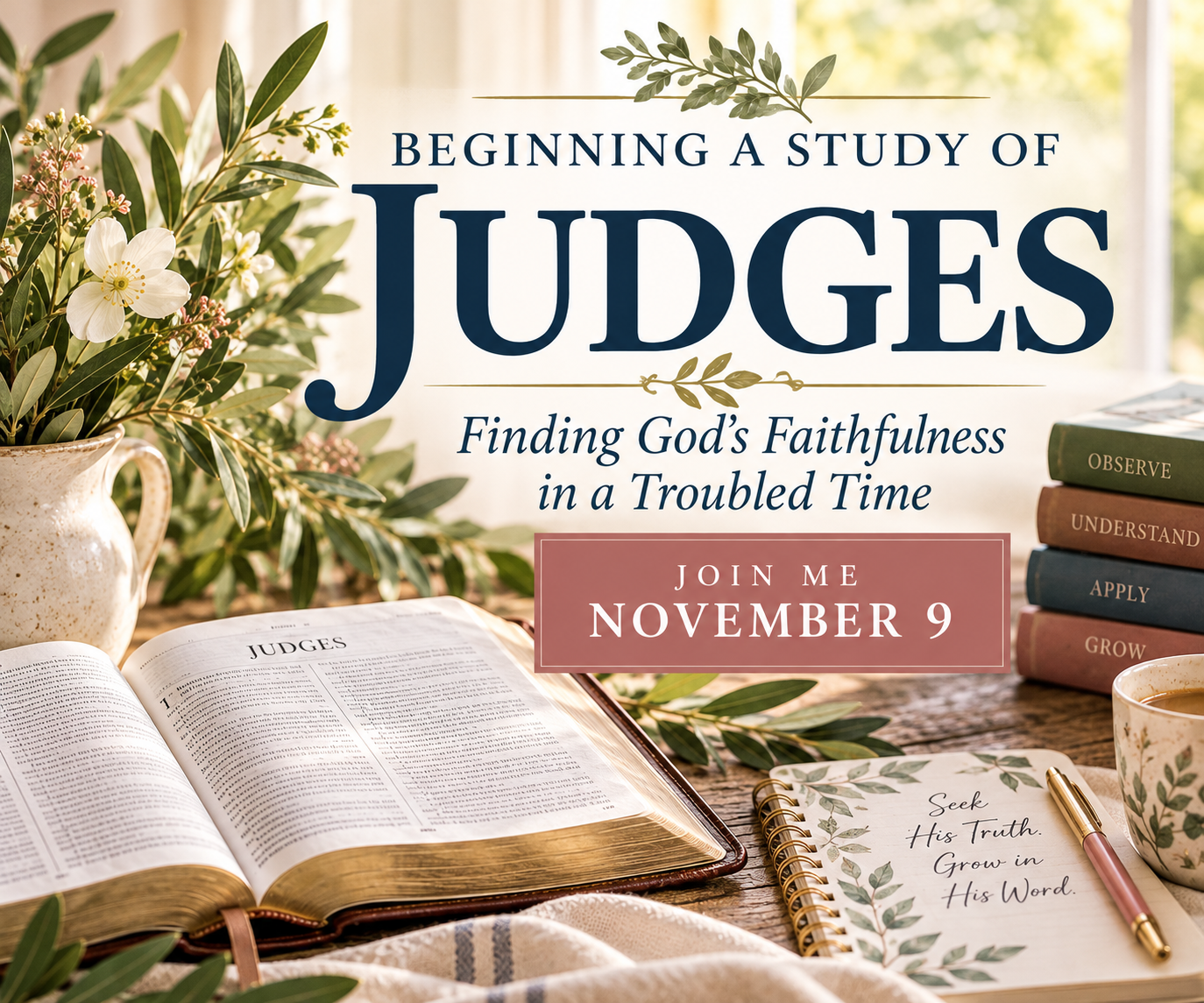
Beginning November 9, I’ll be starting a new Bible study series here at Mary’s Musings as I work through the book of Judges. I’m studying Judges as part of another Bible study, and I’m looking forward to digging deeper into this fascinating book of Scripture and sharing what I discover along the way.
I hope you’ll join me!
Why Study the Book of Judges?
Judges takes us into a challenging period in Israel’s history. After the death of Joshua, the Israelites struggled to remain faithful to the Lord. Again and again, they turned away from Him, experienced the consequences of their choices, cried out for help, and received deliverance through judges God raised up.
Then the cycle repeated.
The book is not always easy to read. Some of its accounts are violent, disturbing, and difficult to understand. We may find ourselves asking why people made such destructive choices, why Israel continued to turn away from God, and what these stories reveal about the human heart.
Those questions are worth bringing to our Bibles.
Judges helps us examine what happens when people forget God’s Word, compromise their faithfulness, and begin to follow what seems right in their own eyes.
Judges 21:25 gives us a sobering summary of the spiritual condition of the nation:
“In those days there was no king in Israel. Everyone did what was right in his own eyes.”
That statement is more than a description of ancient Israel. It invites us to consider the importance of God’s authority in our own lives.
What happens when we decide that our preferences matter more than God’s instructions? How easily can compromise become a pattern? What can we learn from the consequences of repeatedly turning away from the Lord?
These are not comfortable questions, but they are important ones.
A Repeated Cycle—and a Faithful God
One of the most recognizable patterns in Judges is the cycle of Israel’s unfaithfulness.
The people turned away from God and worshiped other gods. Their choices brought oppression and suffering. Eventually, they cried out to the Lord, and He raised up a deliverer. The land experienced peace for a time, but after that judge died, the people often returned to their former ways.
As we study these accounts, we will see that Israel’s greatest problem was not simply a lack of strong leadership. Their hearts repeatedly turned away from the God who had rescued them.
And yet God continued to respond to their cries for help.
This does not mean we should overlook the seriousness of sin or assume that every difficult circumstance follows the same pattern. Rather, the book invites us to pay careful attention to God’s character, Israel’s choices, and the consequences Scripture records.
We will see God’s justice, His compassion, His patience, and His willingness to deliver His people. We will also see that the judges themselves were imperfect people, and that their stories do not always provide examples for us to imitate.
Reading Judges carefully means looking beyond the individual stories to understand what the whole book reveals about God and His people.
Getting to Know the People in Judges
As we move through the book, we will encounter a fascinating cast of characters.
Some are familiar names. Others receive only a few verses. Each account contributes something to the larger story of Israel’s spiritual condition.
We will read about Othniel, Ehud, Deborah, Gideon, Jephthah, and Samson, among others. We will also examine figures such as Abimelech, whose story exposes the dangers of ambition, manipulation, and the pursuit of power.
Some of these people display remarkable courage. Others make deeply troubling decisions. Some demonstrate faith in God while also revealing significant weaknesses.
Rather than placing every judge on a pedestal, we will look carefully at what the biblical text actually says.
What motivated their actions? What did their choices reveal? How did God work within the circumstances of their lives? What consequences followed?
And perhaps most importantly, what does each account contribute to our understanding of the book as a whole?
These questions will help us move beyond simply knowing the stories to understanding their meaning.
How I Plan to Study Judges
One thing I love about studying Scripture is discovering how much more we see when we slow down and look carefully at the text.
As I study Judges, I want to pay attention to more than the familiar stories. I want to consider the historical setting, observe repeated words and patterns, investigate the meaning of difficult passages, and reflect on what the text teaches us about God.
I’ll be using the same basic principles that guide my approach to Bible study:
- Observe the text. What does the passage actually say? Who is involved? What happens? Are there repeated words, actions, or patterns?
- Understand the context. What was happening in Israel’s history? How does this account fit within the surrounding chapters and the larger biblical story?
- Investigate the meaning. What did the passage communicate in its original setting? What does it reveal about God’s character, human nature, obedience, and faith?
- Dig deeper. Where might historical background, cross-references, or word studies help clarify the passage?
- Consider the application. How should understanding this passage shape the way we think, respond, and live?
I want to be careful not to rush to application before understanding what the passage meant. The goal isn’t to make every story say something we already believe. It is to allow God’s Word to shape our understanding.
Some passages may challenge our assumptions. Others may leave us wrestling with difficult questions. And some may reveal connections we have never noticed before.
That is part of the joy of studying the Bible.
What Can Judges Teach Us Today?
Although Judges describes events from a very different time and culture, its themes still invite thoughtful reflection.
The importance of remembering God’s faithfulness. Israel repeatedly forgot the Lord and what He had done for them. Remembering God’s character and His works helps us cultivate gratitude and faithfulness.
The danger of compromise. The book shows how turning away from God’s instructions can lead to destructive consequences. Small choices matter, especially when they gradually reshape our understanding of what is right.
The need for godly leadership. The judges were imperfect deliverers, and their stories reveal the limitations of human leadership. As we read, we are reminded of the need for a righteous King who can truly rescue and restore His people.
The mercy of God. Again and again, God heard His people’s cries. His willingness to deliver them reveals something important about His compassion, even as the book takes the people’s sin seriously.
The consequences of doing what seems right in our own eyes. Judges warns us about the danger of making ourselves the final authority over right and wrong.
As we study, I hope we will resist the temptation to read these accounts only as stories about people who lived long ago. Instead, we can ask what they reveal about the human heart, the seriousness of sin, the character of God, and our need for His wisdom and direction.
Will You Study Judges With Me?
Beginning November 9, I’ll be sharing this new series here at Mary’s Musings.
We’ll work through the book of Judges, exploring its people, its major events, its recurring themes, and the lessons we can discover through careful study of Scripture.
My hope is that these articles will help you become more comfortable reading challenging passages, asking thoughtful questions, and looking beyond the surface of familiar Bible stories.
You don’t need to be a Bible scholar to study Judges. You simply need your Bible, a willingness to slow down, and a heart ready to learn.
You may already know the story of Gideon or remember Samson from childhood Bible lessons. Perhaps Deborah is a familiar name, or perhaps much of this book is new to you.
Wherever you’re beginning, there is room to grow in your understanding of God’s Word.
And if you encounter a passage that leaves you puzzled, don’t feel that you have to resolve every question immediately. Write it down. Look at the surrounding context. Compare Scripture with Scripture. Pray for wisdom, and keep studying.
Faithful Bible study is not about having every answer at once. It is about learning to handle God’s Word carefully and allowing it to deepen our knowledge of Him.
Let’s Begin Together on November 9
I’d love for you to follow along as we begin exploring Judges.
Here’s a simple way to prepare:
- Read Judges 1 and notice what happens after Joshua’s death.
- Write down any questions that come to mind.
- Look for repeated references to obedience, disobedience, and Israel’s relationship with the Lord.
- Ask God to give you wisdom and understanding as you read.
You don’t have to understand the entire book before we begin. Just come with an open Bible and a willingness to learn.
I’m looking forward to studying this challenging and important book with you.
What comes to mind when you think about the book of Judges? Is there a particular person or story you would like to understand better? I’d love to hear from you in the comments.
Until next time, keep opening your Bible, asking questions, and seeking to know God more deeply.
Let’s abide in His Word and continue to grow together.
— Mary
Mary’s Musings

Let me know what you think.