
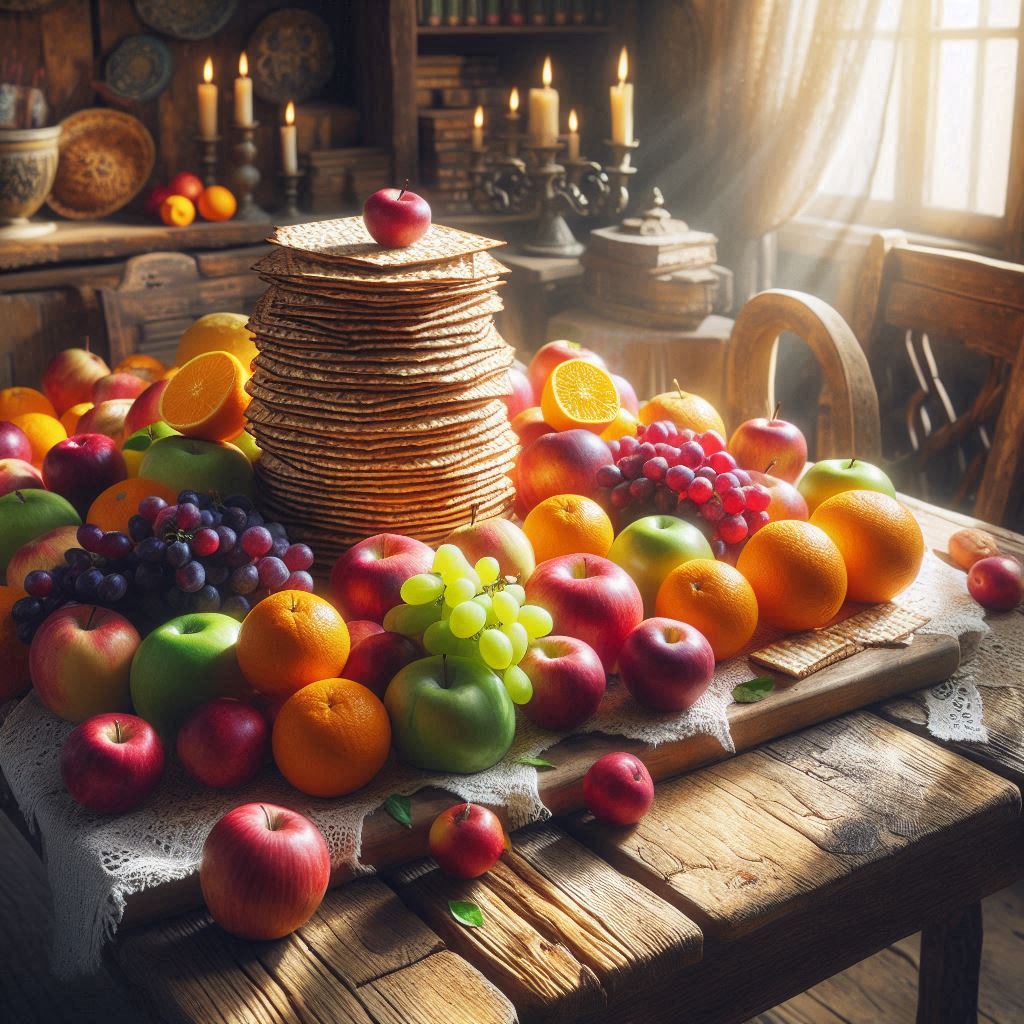
We will look at the last Jewish Feast–Feast of the Tabernacles. It is often called the Feast of the Booths.
If you have missed any articles, click the links below to read them:
Description:
Leviticus 23:33-44 tells us about the final feast, “And the LORD spoke to Moses, saying, “Speak to the people of Israel, saying, On the fifteenth day of this seventh month and for seven days is the Feast of Booths to the LORD. On the first day shall be a holy convocation; you shall not do any ordinary work. For seven days you shall present food offerings to the LORD. On the eighth day you shall hold a holy convocation and present a food offering to the LORD. It is a solemn assembly; you shall not do any ordinary work. 37 “These are the appointed feasts of the LORD, which you shall proclaim as times of holy convocation, for presenting to the LORD food offerings, burnt offerings and grain offerings, sacrifices and drink offerings, each on its proper day, besides the LORD’s Sabbaths and besides your gifts and besides all your vow offerings and besides all your freewill offerings, which you give to the LORD. “On the fifteenth day of the seventh month, when you have gathered in the produce of the land, you shall celebrate the feast of the LORD seven days. On the first day shall be a solemn rest, and on the eighth day shall be a solemn rest. And you shall take on the first day the fruit of splendid trees, branches of palm trees and boughs of leafy trees and willows of the brook, and you shall rejoice before the LORD your God seven days. You shall celebrate it as a feast to the LORD for seven days in the year. It is a statute forever throughout your generations; you shall celebrate it in the seventh month. You shall dwell in booths for seven days. All native Israelites shall dwell in booths, that your generations may know that I made the people of Israel dwell in booths when I brought them out of the land of Egypt: I am the LORD your God.” Thus Moses declared to the people of Israel the appointed feasts of the LORD.”
As I first read this passage, I wondered about the meaning of a “holy convocation’. I wanted to make sure I understood what that term meant. A holy convocation is an assembly where the Israelites were summoned. It is commanded in the Mosaic law. They are as follows:
- Sabbaths (Leviticus 23:2–3)
- Passover (Exodus 12:16; Leviticus 23:7)
- The Feast of Unleavened Bread (Exodus 34:18)
- Feasts of Weeks/Pentecost (Numbers 28:26; Leviticus 23:21)
- Trumpets (Numbers 29:1; Leviticus 23:35–36)
- Day of Atonement (Leviticus 23:27; Numbers 29:7)
- Tabernacles (Leviticus 23:35; 23:39)
The Feast of Tabernacles began on the fifteenth day of the seventh month. The seventh month is known as Tishrei and is considered the “holy” month on the Jewish calendar. It occurs during September and October on our calendar. The feast begins and ends with a holy convocation, which would have also been a sabbath day. It was one of the three times that people were commanded to appear before the Lord in Jerusalem. They were to bring a gift that coincided with how the Lord had blessed them.
In her book, A Prophetic Calendar: The Feasts of Israel, Jill Shannon writes, “This joyful seven-day festival contains many themes, but probably the heart of God can best be captured by the word indwelling. This word speaks of the relationship between God and man; it represents the Lord’s desire to dwell with His people, even to dwell in His people. He has made Himself available to camp in their midst, to spend intimate times of fellowship with them, and to refresh them in the camp as they are preparing for coming seasons of marching out. Difficult assignments await them, and without camping times, the marching times of conquest will not be successful.” p. 180
Shannon goes on to describe the feast, “On the first day, you are to take choice fruit from the trees, and palm fronds, leafy branches and poplars, and rejoice before the Lord your God for seven days. Live in booths for seven days: All native-born Israelites are to live in booths so your descendants will know that I had the Israelites live in booths when I brought them out of Egypt (Leviticus 23:34;39b-40;42-43b). The Lord has commanded us to dwell in primitive and temporary structures for seven days. These are somewhat like tents, but there is a different biblical word that could have been used for “tent” (ohel). This Hebrew word is closer to a “booth” or “hut,” and is the word succah. Thus, the Jewish people call this feast by its plural form, Succot.” p. 182
Why were the people asked to reside in a tent or a booth? It represents the forty years that the Israelites wandered in the desert and slept in tents. The Lord used the times of wandering to teach them that their security could only be found in Him. He still uses the wilderness times to teach us lessons that only trials can teach.
I never made the connection that the Feast of Tabernacles also occurred when the Israelites returned to rebuild the temple in Ezra 3. Ezra also read the law during this feast in front of the water gate. In Nehemiah 8, we read where Ezra read the law, and the people stood. Jesus made the statement in John 7:37-38 about rivers of living water. Nothing in God’s Word is accidental.
Shannon says, “These seven days were a time of great quantities of animal sacrifices. We see a detailed account of these sacrifices in Numbers 29:12-39. The totals of each type of animal were always multiples of the number seven. In summary, during the seven days of Tabernacles, seventy bulls were sacrificed, fourteen rams, seven goats, and ninety-eight lambs, if I have calculated correctly. There were others on the eighth day, but the number did not follow the same decreasing numerical pattern as the first seven days. These seven days were a time of great quantities of animal sacrifices. We see a detailed account of these sacrifices in Numbers 29:12-39. The totals of each type of animal were always multiples of the number seven. In summary, during the seven days of Tabernacles, seventy bulls were sacrificed, fourteen rams, seven goats, and ninety-eight lambs, if I have calculated correctly. There were others on the eighth day, but the number did not follow the same decreasing numerical pattern as the first seven days.” p. 187
“The priests brought the ark into the Holy Place and then withdrew, while the Levitical musicians worshiped, playing many instruments and singing with one voice: “He is good; His love endures forever.” Then the temple of the Lord was filled with a cloud, and the priests could not perform their service because of the cloud, for the glory of the Lord filled the temple of God (2 Chronicles 5:13-14)”. p. 188
Gotquestions.org says this: “The Feast of Tabernacles begins and ends with a special Sabbath day of rest. During the days of the feast, all Israelites were to dwell in booths to remind them that God had delivered them out of the land of Egypt, and to look forward to the coming Messiah who would deliver His people from the bondage of sin. This feast, like all of the feasts of Israel, consistently reminded the Jews of God’s provision, protection, and lovingkindness.”
“As we study the feasts today, we should let them remind us of God’s faithfulness and care. Jesus has accomplished so much for us—He is our all in all—and He has promised to come again. We long for the Promised Land (heaven) and to see our Savior face to face. Our hearts long for the time when our redemption will be complete and Jesus Christ once again “tabernacles” among us.”
Christ’s fulfillment:
This feast points to the second coming of the Messiah, where God will dwell with His people in the future Millennial Kingdom. What a day that will be! According to www.judeochristianclarion.com, “The Feast of Tabernacles is intrinsically connected to the Millennial Kingdom, also known as the Messianic Age, when Yeshua (Jesus) will reign on earth for 1,000 years. In fact, it is specifically mentioned that during this time, the nations will come up to Jerusalem and celebrate this very festival (Zechariah 14:16). Interestingly, any of the nations who decide not to celebrate it will be punished (Zechariah 14:18).”
The New Covenant eliminates the need for animal sacrifices. The blood of Christ covers our sins once and for all. We can, however, offer our praise to the Lord. We need to make sure we are praising and worshiping God. He wants us to join with Him and completely surrender our hearts to Him.